Seven Design Elements to Build Human Connection in Meetings
I arrived before the hundreds of participants, before the speakers took their place on the grand stage, and before the enormous background screen was lit up with countless images, text and camera zoom shots of the presenters on stage or Skyped in.
The collective event – the experience they shared – was one of listening. Conference goers, experts in their own right, listening to experts with a higher profile. Highly qualified keynotes, professionals in panels and dignitaries reading their speeches were given all the time in the day. There were over twenty presentations, varying in length from five to forty-five minutes. The dynamic the entire day, from 8:30 in the morning to 5:00 in the afternoon was audience-and-speaker. It was all PUSH.
Even if you have the best content, it’s still just content.
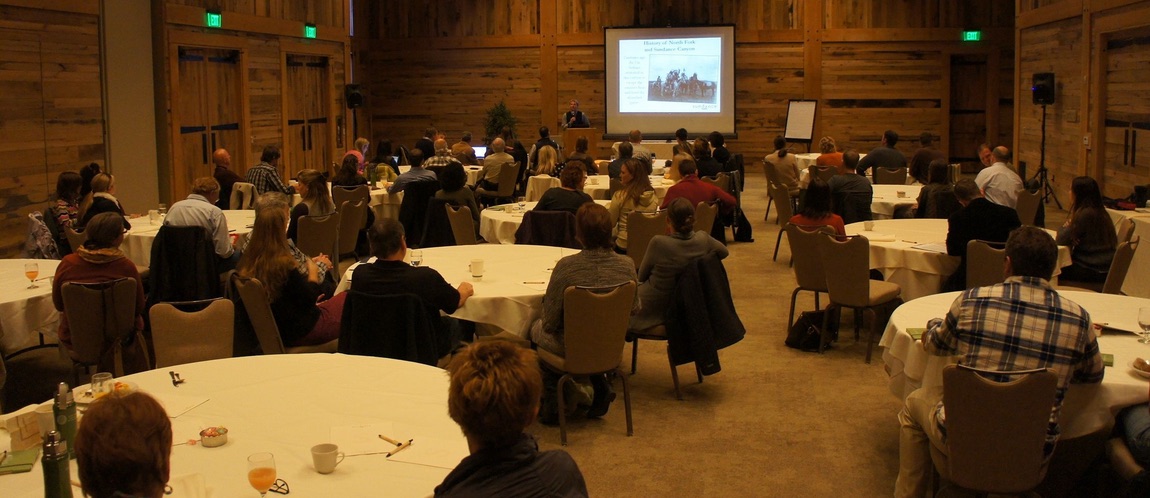
This experience was not unique. It was not unexpected. We have all been to that conference – heck, many of us have planned and led that conference. People didn’t get to share, or really ask questions, or hear from their colleagues from around the world beyond the handful on stage or in a video.
There was a cocktail reception offered at 5:00pm, and about a third of the people stuck around for a drink or a visit. One participant approached me at the reception and said he was exhausted from the day and regretted not getting to meet others in the room. “Unless you’re an A-type personality, you’re not networking right now, you’ve gone home.”
Granted, nowhere did this event tout itself as a community-building event, or an event about engagement of any kind. It was about innovation, but it wasn’t social innovation.
When you add up the time and effort – the actual financial cost, as well as the rare opportunity to have hundreds of people from the same industry – leading thinkers – in the same room for the whole day… why would you have them silent and listening the whole time?! Is this really the best use of a day and a room full of that kind of knowledge, innovation and human collaboration potential?
What if, when you brought people together, they could be fully present – not sitting and ignoring neighbours at their tables, tweeting questions that never get answered from the stage, or worse, checking their email or Facebook? What if people experienced a collective purpose in coming together, creating something new right in that room – new understanding, new achievable outcomes, new vision, inspiration or new connection for future collaborations?
What if innovation happens on the day of the conference, not just as a topic, keynoted retrospectively and beamed through a virtual presentation from Boston or Berlin?
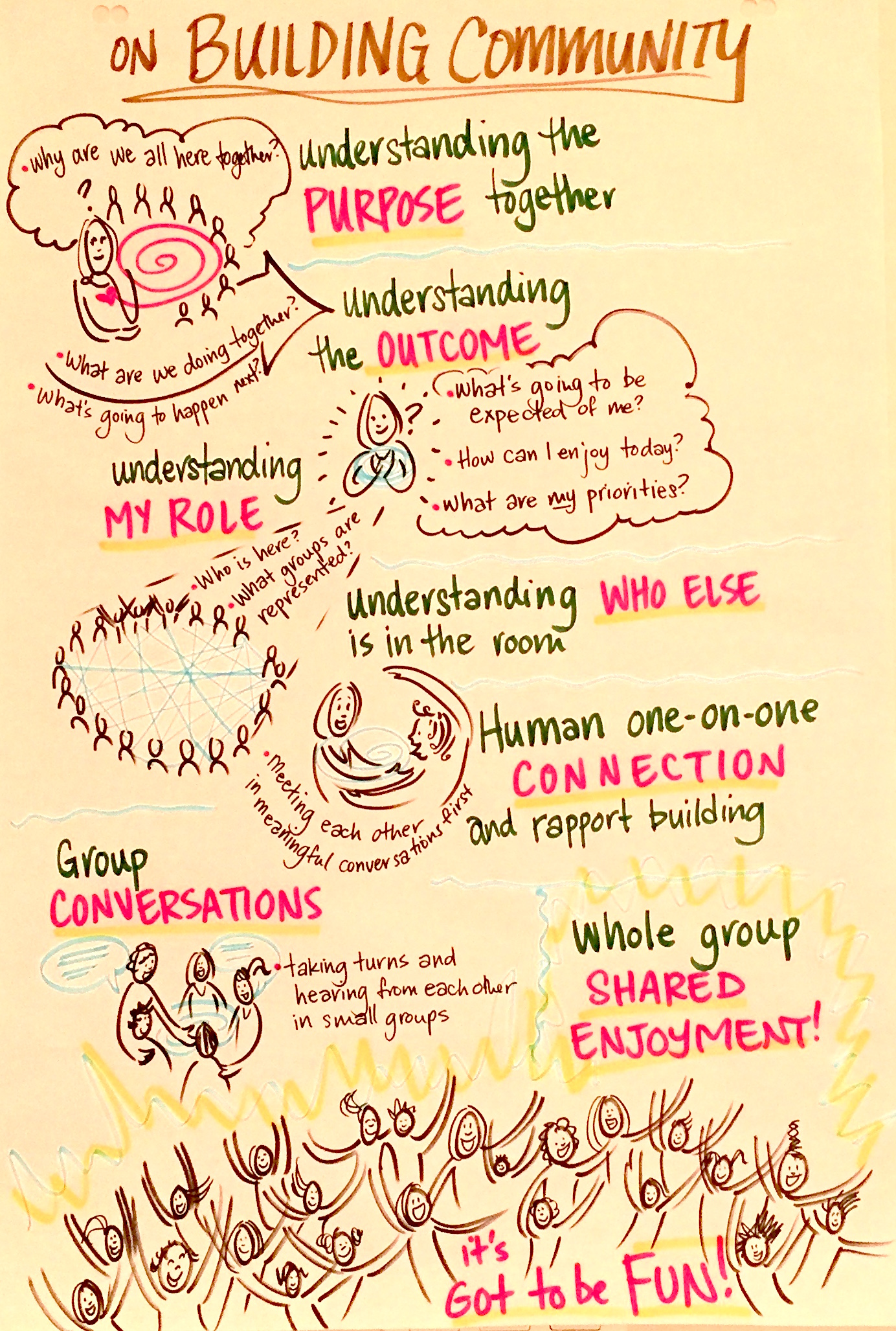
Design Elements to Build Human Connection in Meetings:
- Understanding the Purpose Together:
When people come together, they likely do so with some idea of why they are coming together. But let’s make it explicit in the room. Address it with a question like: “Why are we all here together?” Frame the gathering around the people in the room, not around the subject. Too many events become self-important. On the day of the event, the only thing real is the people in the room. Give them that. People’s presence makes a meeting great. Too many meetings are full of absent people. Step one: give them a purpose for being present.
- Understanding the Outcome Together:
Participants want to know, “What is going to happen here?” Yes, the agenda gives you an idea of this – but going a little deeper into it can help people participate more fully, see how they can best invest their attention and energy in the day. “What are we doing together?” “What will we accomplish today?” Give a flyover to add a meta perspective. Make it visual to allow extra engagement, creativity and complexity.
- Understanding My Role:
Honour your participants by offering them time and space to consider: “What is expected of me?” “How can I enjoy today?” “What are my priorities in being here today?” Too many times, this part is skipped over. If you guide this process well, people can see themselves as included in the success of the day, and can share in the responsibility for a positive, participative outcome.
- Understanding Who Else is in the Room:
This is almost always missed in big meetings. Knowing who else is in the room is one of the greatest resources in large groups. Shared awareness about who is at your table is the first step. Provide ways of showing the group who is there: participant lists with photos in a booklet, a big bio wall with photos, an app, table templates, name tags with extra info on them such as their hope for the day. Make it visible if possible. Have people move around. Call if out from the stage: “What groups are represented?” “Who is local?” “Who came from other communities?” Ask people “Who might you most want to connect with?” Leaving the masses stuck and silent at their tables is the worst use of their time.
- Human One-on-One Connection and Rapport Building:
Only confident extroverts introduce themselves all day to the folks they meet. Make the meeting fun and accessible from a relating point of view regardless of how introverted individual participants are. Start at the table level. Offer people meaningful conversation starters; inquiry that is relevant and interesting can create short but authentic moments of connection. For example, “Tell me about something you love about where you live or how you live?” The topic could also be something closer to the topic of the meeting – no matter, make it appreciative, energizing and short, just a minute or two for each person in pairs. Find ways to do this type of exercise several times with different questions to ensure more connections.
- Have Small Group Conversations:
Taking turns hearing from each other in small groups increases understanding, creates a diversity of perspectives and fuels creativity and new relating. When all you have is speaker-audience communication, your “participants” habitually zone out into TV-watching mode, not relating mode. Those speakers are not responding in the moment to your eyes, your curiosity or even your boredom. Most of them have a canned presentation, with an introduction video, PowerPoint slides, and five to ten minutes to respond to the top tweeted questions. It’s not a human connection; it’s something else. But conferences don’t need to be ONLY THAT.We can be humans, relating to other humans, working to solve the most complex challenges of the day. Have conversations. Meet and listen to many people. Share your ideas. Change your mind. Open your heart to walking in others’ shoes over a cup of coffee. This is how community gets built at meetings.
- Shared Enjoyment:
Finally, many of us don’t enjoy all-day meetings (gasp!). How can this change? What if those meetings are actually a day of discovering new ideas, meeting inspiring people, being seen and heard, being creative, learning or inventing new things – new methods solutions or possibilities, and… even something like singing or… dancing?! Well – it’s possible!
Set a new standard with your next meeting or conference. Break out of the default conference models, people. They suck. Nobody wants to sit at a round table all day ignoring their neighbours and listening to presentations from twenty-four people, let’s be honest.
So – let’s not. Instead, let’s be humans with each other. Let’s share and laugh and connect. Let’s tackle the complex challenges we have before us with courage, creativity and humility. Let’s open our minds to learn and be seen and heard. Enough with the anonymous PUSH conferences. Let’s build community with our meetings.
This is obviously not an exhaustive list of elements that build community in meetings, just a start. You could also consider: having a listserv for the group to stay in touch, plan future smaller gatherings, create topical groups, launch a follow up survey, create a community of practice or further points of connection. Please add your ideas or thoughts on how you build community through meetings in the comments section or email me directly. This is just the start of the conversation!
Contact Stina by calling 604-612-8563, email stina at stinabrown.com or fill out the form below.




 Stina Brown